
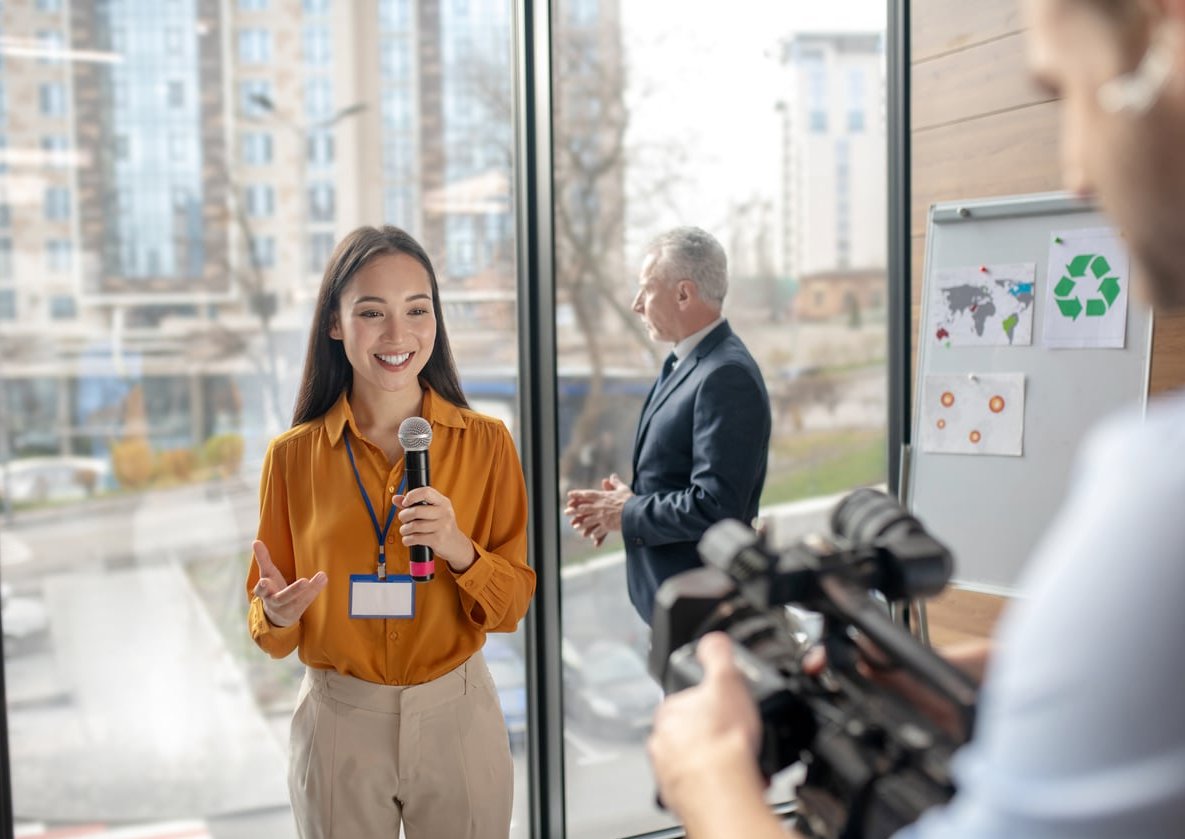
Speeches are one of the few moments of a wedding day you cannot ask anyone to repeat. The room is dark, the speaker is often lit by a single warm spotlight, the couple is laughing and crying two tables away, and everyone can hear your shutter. Getting all of that right takes a plan, not luck.
This guide breaks down exactly how to photograph wedding speeches: positioning, exposure, lens choices, reaction coverage and silent shutter use. It is written from the reception floor, not from theory.
The 3 shots every speech must deliver
Before you think about settings, be clear about what a complete speech gallery looks like. If you only bring back photos of people holding a microphone, the set feels flat. Aim for three layers:
- The speaker: a clean, well exposed frame with an expressive face and hand gesture. Two or three keepers per speaker is plenty.
- The couple reacting: laughter, tears, the hand squeeze, the head thrown back. This is usually the most emotional image of the entire reception.
- The room reacting: guests laughing, a mother wiping her eyes, the best man’s table losing it, and a wide frame that shows the whole scene with the speaker in it.
Rule of thumb: if you shoot 60 frames during a five minute speech, roughly 20 should be the speaker, 25 the couple, and 15 the room. The speaker is the easiest shot and the least valuable.
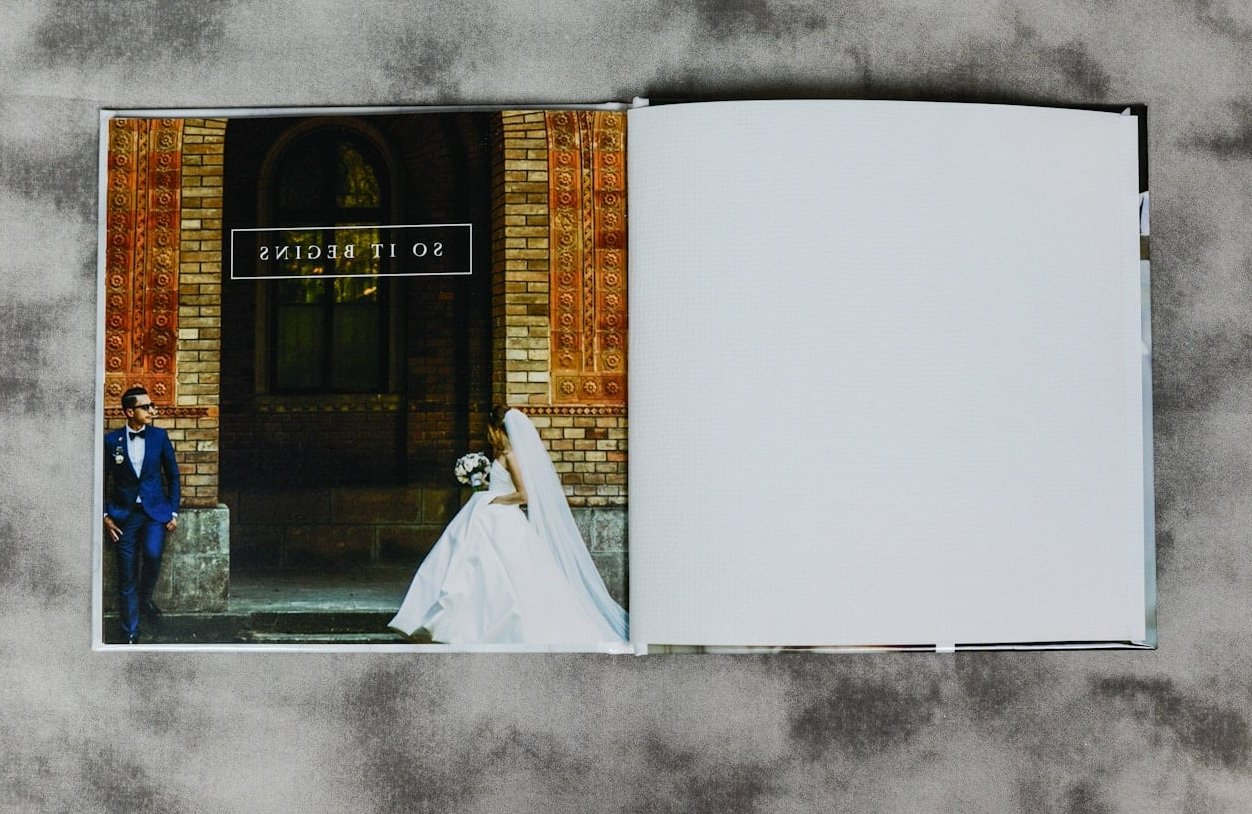
Where to position yourself during the toasts
Scout the geometry before the first glass is raised
Walk the room while guests are still finishing dinner and answer four questions:
- Where will each speaker stand, and are they fixed or roaming with a handheld mic?
- Which direction does the couple face from that spot?
- Where is the light coming from, and what is directly behind the speaker (a window, a DJ booth, an exit sign)?
- Can you physically get between and around the tables without climbing over guests?
The triangle position
The most reliable setup is a triangle: the speaker at one point, the couple at another, and you at the third, standing so that a small pivot of your body swings you from one to the other. You want the axis between speaker and couple to be roughly 60 to 90 degrees from where you stand, not 180 degrees. If you are directly between them, every reaction shot means turning your back on the speaker and missing the punchline.
Practical placement:
- Slightly off to one side of the speaker, about 3 to 6 metres away, shooting the couple over or past the speaker’s shoulder.
- Never dead centre in the aisle for long. You block guests and you end up in every guest’s phone video.
- Stay low when moving. A crouched walk behind chairs is invisible. A photographer standing upright crossing the room is the thing guests remember.
- Find a second anchor point on the opposite side of the room and move between the two only during applause or laughter, never mid-sentence.
Working with a second shooter
If there are two of you, split the job and do not both chase the speaker. The classic split, borrowed from multi camera video coverage:
| Shooter | Primary subject | Typical lens |
|---|---|---|
| Lead | Couple’s reactions, locked in the whole time | 70-200mm or 85mm |
| Second | Speaker, plus wides of the room | 24-70mm and 35mm |
Agree on this out loud before the first speech starts. Two photographers pointing at the same face is the most common wasted opportunity of the evening.

Exposing for a spotlit speaker in a dim reception room
This is where most speech galleries fall apart. A single warm spotlight or a bank of uplighters creates a brutal dynamic range: the speaker’s face is three or four stops brighter than the guests around them.
Step 1: expose for the face, let the room go dark
Do not try to lift the whole room. A dark, moody background with a well lit face looks intentional and cinematic. A grey, noisy, evenly lifted frame looks like a mistake. Meter on the speaker’s face using spot metering or shoot manual and check your highlights.
Step 2: protect the highlights, not the shadows
Modern sensors recover shadows far better than blown skin. Set exposure so the brightest part of the forehead sits just below clipping. On mirrorless, turn on zebras at around 95 to 100 or use the histogram in the EVF and adjust in real time.
Step 3: lock a working baseline
| Setting | Starting point | Why |
|---|---|---|
| Mode | Manual with Auto ISO, or full manual | Lighting is fixed for the whole speech, so lock it and stop fighting the meter |
| Shutter speed | 1/160 to 1/250s | Speakers gesture fast, and laughter is motion. 1/125s is the absolute floor |
| Aperture | f/1.8 to f/2.8 | f/2.8 for two people together, f/1.8 for single faces at distance |
| ISO | 1600 to 8000, whatever the face needs | Noise is fixable, a dark unusable frame is not |
| White balance | Manual Kelvin, roughly 2800K to 3400K | Auto WB shifts every frame as coloured uplighters change, which ruins batch editing |
| Focus | Continuous AF with eye detection, back button | Lets you hold focus on a face and fire the instant a reaction lands |
Step 4: decide on flash before the speeches, not during
Three workable approaches, in order of preference:
- Ambient only. Best when the speaker has a decent spotlight. Fastest, quietest, least intrusive. Requires a fast lens and a camera you trust at high ISO.
- Bounced on-camera flash at low power. Only if ceilings are white or light coloured and reasonably low. Dial it down to around minus 1 to minus 2 stops so it fills rather than replaces the ambient mood. Never bounce off a coloured ceiling.
- An off-camera light on a stand behind the couple or at 45 degrees to the speaker. Great results, but set it up during dinner and warn the venue coordinator. During speeches you cannot be adjusting stands.
If the room is genuinely too dark for available light and flash is not allowed, a small constant LED at very low output aimed at the couple from a distance can save the reaction shots. Keep it dim enough that guests do not notice it. A comparable breakdown sits on digital-photography-school.com.
Lens choices for speech coverage
| Lens | Best for | Watch out for |
|---|---|---|
| 70-200mm f/2.8 | Reaction shots from the edge of the room, tight faces without invading the moment | Needs distance and light. Heavy to hold for 40 minutes of speeches |
| 85mm f/1.4 or f/1.8 | Dark rooms where f/2.8 is not enough, beautiful subject separation | Fixed framing means you move, and moving means being seen |
| 24-70mm f/2.8 | Speaker plus top table in one frame, mid-range room context | Too wide for tight emotion, too tight for the full room |
| 35mm f/1.4 | The establishing frame: speaker, couple, guests, decor and candlelight together | Requires you to be close, so shoot these during applause |
Two body setup wins. A 70-200mm on one shoulder and a 35mm on the other means you never change lenses in a silent room. If you only have one body, put the 70-200mm on and grab your wides between speeches.

Capturing the couple’s reactions without missing the speaker
This is the real skill. The technique is listening, not watching.
- Listen for the setup, shoot the payoff. Jokes have rhythm. When you hear a story building or the speaker’s voice change pace, pre-frame the couple and hold focus on the partner most likely to react.
- Favour the more expressive partner if you can only frame one, but try to keep both in the frame at f/2.8 so you never miss the wrong one.
- Shoot through the laugh. The first frame is a smile, the third is the real laugh, the fifth is the wipe of the eye. Short bursts, not single shots.
- Watch the parents. A father listening to his daughter’s speech is often the single best frame of the night, and nobody else is pointing a camera at him.
- Do not chase every word from the speaker. As the SERP veterans say, one photo of a person talking looks like any other. Get your three good speaker frames early, then live on the reaction side.
- Anticipate the ending. The toast, the raised glasses, the hug between speaker and couple. Reposition thirty seconds before the speech wraps so you have the angle for the hug.
Silent shutter in a quiet room: when to use it and when not to
During speeches the room goes near silent, and a mechanical shutter at 8 frames per second is genuinely disruptive. Electronic shutter fixes that, but it brings its own problems. tribute.co has covered this at length.
Use silent shutter when
- The room is quiet and you are close to the top table or the speaker.
- You need short bursts to catch laughter without a distracting rattle.
- The ceremony style venue has explicitly asked for no shutter noise.
Be careful when
- The venue uses LED or fluorescent lighting. Rolling shutter can create horizontal banding. Test a frame before the speeches and turn on the camera’s anti-flicker or high frequency flicker reduction if it has one.
- You are using flash. Most cameras disable flash in fully electronic mode.
- Subjects gesture fast. Slow readout sensors can skew a swinging hand or a microphone.
- You are shooting at very high ISO. Some bodies drop to 12-bit readout in silent mode, costing you shadow latitude exactly when you need it most.
The compromise: if your camera has an electronic first curtain or a quiet mechanical mode, that is often the best of both. Set single shot or a low speed burst rather than 20 fps, and you get a soft click instead of a machine gun.

Timing and prep: things to sort before the speeches start
- Get the running order. Ask the couple or the coordinator who speaks, in what order, and roughly how long. Knowing that the maid of honour is fourth lets you find her at the table and pre-plan an angle.
- Ask about surprises. Slideshows, songs, a child speaking, a video call to a grandparent overseas. These change your position completely.
- Suggest table spacing to the couple in advance. A little breathing room between tables lets you move without disturbing guests. It is worth mentioning at the planning call.
- Ask for the speech area to be lit. One warm spotlight, or simply a spot near a window with remaining daylight, transforms the results. This is the single easiest thing a couple can do to improve their speech photos.
- Eat before the speeches. They almost always start earlier than planned.
- Check your card space and battery. Speeches are a burst heavy, high ISO block of the day and there is no good moment to swap.
Common mistakes to avoid
- Shooting the whole speech from one spot at one focal length.
- Leaving Auto white balance on with coloured uplighters, then spending hours colour matching in edit.
- Standing up and crossing the room mid-sentence.
- Firing hundreds of frames of the speaker and 12 of the couple.
- Blasting direct on-camera flash into a candlelit room and killing all the ambience.
- Forgetting the wide shot that shows the whole room, which is often the one image the couple prints.
- Missing the toast itself because you were reviewing images on the back screen.

A simple 5 minute workflow per speaker
| Time | What to shoot |
|---|---|
| 0:00 to 0:45 | Speaker: check exposure on the face, grab clean frames and gestures |
| 0:45 to 3:00 | Couple: hold on their faces, burst on every laugh or tear |
| 3:00 to 4:00 | Guests and parents, plus one wide establishing frame |
| 4:00 to end | Reposition for the toast, raised glasses and the hug |
FAQ
What is the 30-5 minute rule for weddings?
It is a simple timing guideline for toasts: each speech should run no longer than about 5 minutes, and the whole speech block should stay under roughly 30 minutes. Beyond that, guests lose attention, food gets cold and energy drops before the dancing. As a photographer, it is useful to know because it tells you how long you need to stay on your feet and how many reaction opportunities you realistically get.
What is the 20-60-20 rule in photography?
It is most often quoted as a workflow split: around 20 percent planning and preparation, 60 percent actual shooting, and 20 percent editing and delivery. Applied to speeches, the planning 20 percent is scouting the room, getting the running order and setting your exposure baseline. Do that and the shooting part becomes far easier.
Should I use flash during wedding speeches?
Only if you have to. If the speaker has a usable spotlight, ambient light at f/1.8 to f/2.8 and high ISO will look better and be far less intrusive. If the room is genuinely too dark, use bounced flash at reduced power against a light ceiling, or set an off-camera light before the speeches begin.
What lens is best for photographing speeches?
A 70-200mm f/2.8 is the workhorse for reactions because it lets you shoot tight faces from the edge of the room. Pair it with a 35mm f/1.4 for wides. In very dark venues, an 85mm f/1.4 buys you two extra stops.
How many photos should I take during a speech?
Quality over quantity. Around 40 to 80 frames per speaker is plenty, weighted heavily towards reactions. Delivering 300 near identical shots of someone holding a microphone helps nobody.
What is a good opening line for a wedding speech?
Couples ask photographers this more often than you would think. The safest openers are short, warm and specific: name yourself and your connection to the couple, thank the hosts, then go straight into one honest sentence about the person you are there to celebrate. Avoid long jokes in the first ten seconds, because the room needs a moment to settle. From a photography point of view, a calm opening also gives you time to lock exposure before the first big reaction. Originally covered on https://byrhea.co.uk.
How do I stop banding when using silent shutter?
Turn on your camera’s anti-flicker or high frequency flicker reduction, and if that is not available, switch back to mechanical or electronic first curtain shutter. You can also fine tune your shutter speed, since some values sync better with the flicker frequency of the venue lighting.
Final thought
Great speech photography is 20 percent camera settings and 80 percent knowing where to stand and what is about to happen. Get your exposure locked before the first speaker stands up, then spend the rest of the time watching faces instead of your screen. The couple will barely remember the words a year later, but they will remember the photo of their mother laughing until she cried.
Need a photographer who actually plans for the tricky moments? Get in touch with the team at ComfyPixel.